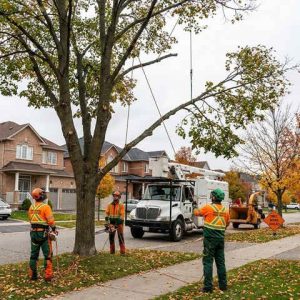


tree pruning Toronto decisions should balance safety, tree species, growth patterns, and seasonal weather. Many property owners prune too late, prune too aggressively, or ignore structural issues until storm season increases the risk.
This guide covers practical timing and planning tips for Toronto and GTA properties. If you need help with trimming or hazard reduction, visit our contact page for a quote.
1. Prune for safety first
Dead, cracked, or hazardous limbs should be addressed promptly instead of waiting for a “perfect” season. Safety risks near roofs, driveways, and walkways usually take priority.
2. Know the goal before cutting
Pruning for clearance, health, structure, or appearance can require different methods. A clear objective helps avoid over-pruning and preserves tree health.
3. Avoid heavy pruning during stress periods
Trees already stressed by heat, drought, pests, or storm damage may need a lighter approach. In some cases, inspection first is better than immediate aggressive pruning.
4. Plan around property access and cleanup
Access routes, fences, wires, and nearby structures affect how trimming work is completed safely and how debris is removed from the site.
5. Combine pruning with longer-term maintenance
Regular pruning schedules can reduce emergency callouts and help you catch structural issues earlier. Consider a maintenance plan for mature trees.
FAQ
Can pruning reduce storm damage risk?
Proper pruning can reduce deadwood and weak branch issues, but each tree should be assessed individually.
Do you also remove trees and stumps?
Yes. See our Services page for tree removal, stump grinding, and emergency tree work.
Need tree pruning Toronto service? Request a quote with photos of the tree and site access.
tree pruning Toronto: What to Plan Before You Start
External Resources
Google Search Essentials and WordPress Plugin Handbook are useful references for best practices.
tree pruning Toronto: Practical Checklist
- Confirm scope and audience
- Define the content goal and CTA
- Use clear headings and examples
- Add supporting internal links
- Review before publishing
Most quality issues come from unclear scope and rushed publishing. A simple checklist improves consistency and readability.
Review your introduction, headings, and conclusion to ensure the article matches search intent and provides practical next steps for the reader.